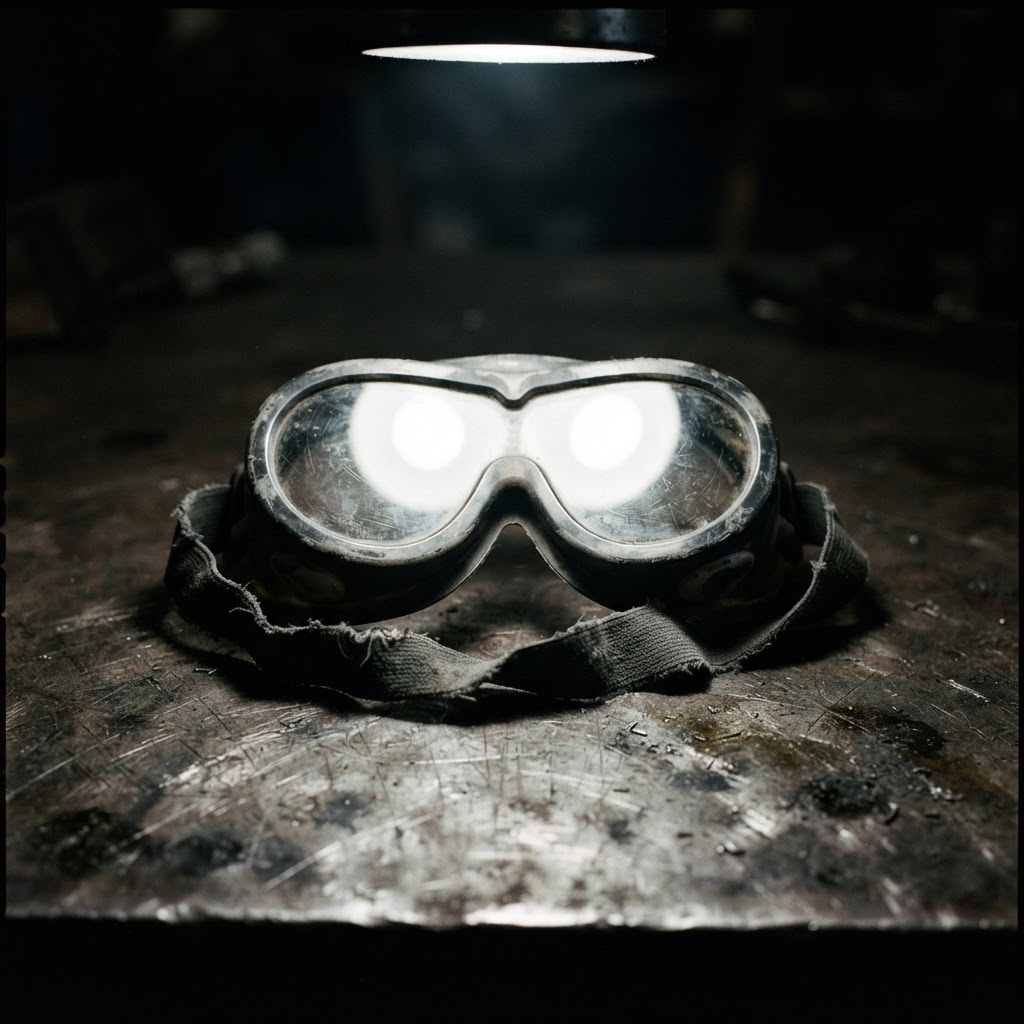
The Blind Spot You Can't See From Inside
Not the kind of blind spot you find in a hazard assessment — the physical ones, the ones behind equipment or around corners.
I'm talking about the cognitive kind. The one that lives in the mind of a competent, experienced person who has done everything right and still can't see the gap in their own work.
It goes like this: a supervisor selects a control, implements it, documents it, and then confirms it's adequate. The permit system records that a control exists and that someone verified it. PASS. The work begins.
And nobody asks the one question that would catch what's about to go wrong: is the person who checked this the same person who set it up?
The bias that doesn't feel like a bias
This isn't about carelessness. It's not about incompetence. It's about something much quieter and much more common: the well-documented tendency for people to overestimate the adequacy of their own work, particularly under time pressure.
A supervisor who selected and installed a barricade will tend to assess it as sufficient. Not because they're lazy — because they built it, they understand the logic behind it, and their brain has already closed the loop. The decision feels complete. The barricade feels adequate. And from inside that closed loop, it is.
But an independent verifier — someone walking up to that barricade fresh, seeing it for the first time, checking it against the hazard without the context of having built it — they might notice something. That the barricade doesn't account for a specific edge case. That the gap on the left side is wider than it looks from straight on. That the footing beneath it isn't stable enough for the load it's meant to hold.
These are not things a careless person misses. These are things a competent person misses because they're inside their own reasoning — and from inside, the logic is always sound.
Why independence is not distrust
When I say "independent verification," people sometimes hear "we don't trust our supervisors." That's not it at all. Independent verification is not about distrust. It's about the structural reality that self-assessment has a built-in blind spot — and that blind spot doesn't shrink with experience. In fact, experience can make it worse, because the more familiar someone is with a task, the more automatically their brain closes the loop.
This is why independence of verification is a foundational principle in safety engineering, in quality assurance, in auditing, in every field where the adequacy of work matters. Not because people can't be trusted. Because the same brain that builds something is not the best brain to evaluate it.
What changes when the system enforces it
When a permit system tracks who implemented each control and who verified it — and flags any permit where those are the same person for high-risk work — something shifts. Not just in the data. In the behaviour.
Supervisors start asking colleagues to verify their controls. Not because the system forced them — because the system made the expectation visible. Verification stops being a rubber stamp and starts being a genuine second look. And the second look is where the edge cases get caught.
For the highest-risk work — tasks where the worst credible outcome is not an injury but a fatality — independence isn't just "a different person." It's a more senior person. Someone with the experience to see what the implementer can't, and the authority to require changes before permission is given.
Self-certification is not verification. It is confidence without a second set of eyes — and confidence without a second set of eyes is how serious incidents begin.
One action: pull your last three high-risk permits. Look at who implemented the controls and who verified them. If the answer is the same name, you've found your blind spot. Not because that person isn't competent. Because no one can see it from inside.
It is available to you. Not after the next audit. Now.